The Future of Podcast Intelligence
For anyone whose job is understanding what smart people think.
The Problem Nobody Is Solving
There are hundreds of podcast apps. Most do the same thing: download episodes, play them at 2x speed, maybe generate a summary.
But here's what none of them answer:
"What do 50 experts think about AI agents?"
"Alert me when any finance podcast mentions rate cuts."
"Show me every time a VC discussed seed valuations this quarter."
These are real questions from real professionals — analysts, investors, researchers, journalists. People who get paid to understand what smart people think.
And yet, every podcast tool stops at the same place: one episode, one summary.
Summarizers Are a Dead End
The current generation of podcast AI tools are all solving the wrong problem.
They reduce one episode to bullet points. Useful? Maybe. But professionals don't consume podcasts one at a time. They need to monitor networks of voices.
A hedge fund analyst doesn't care what one host said about $NVDA. They care what all the hosts said — and whether sentiment shifted before the stock moved.
A brand marketer doesn't want to know if their competitor was mentioned in one episode. They want to track every mention across hundreds of shows.
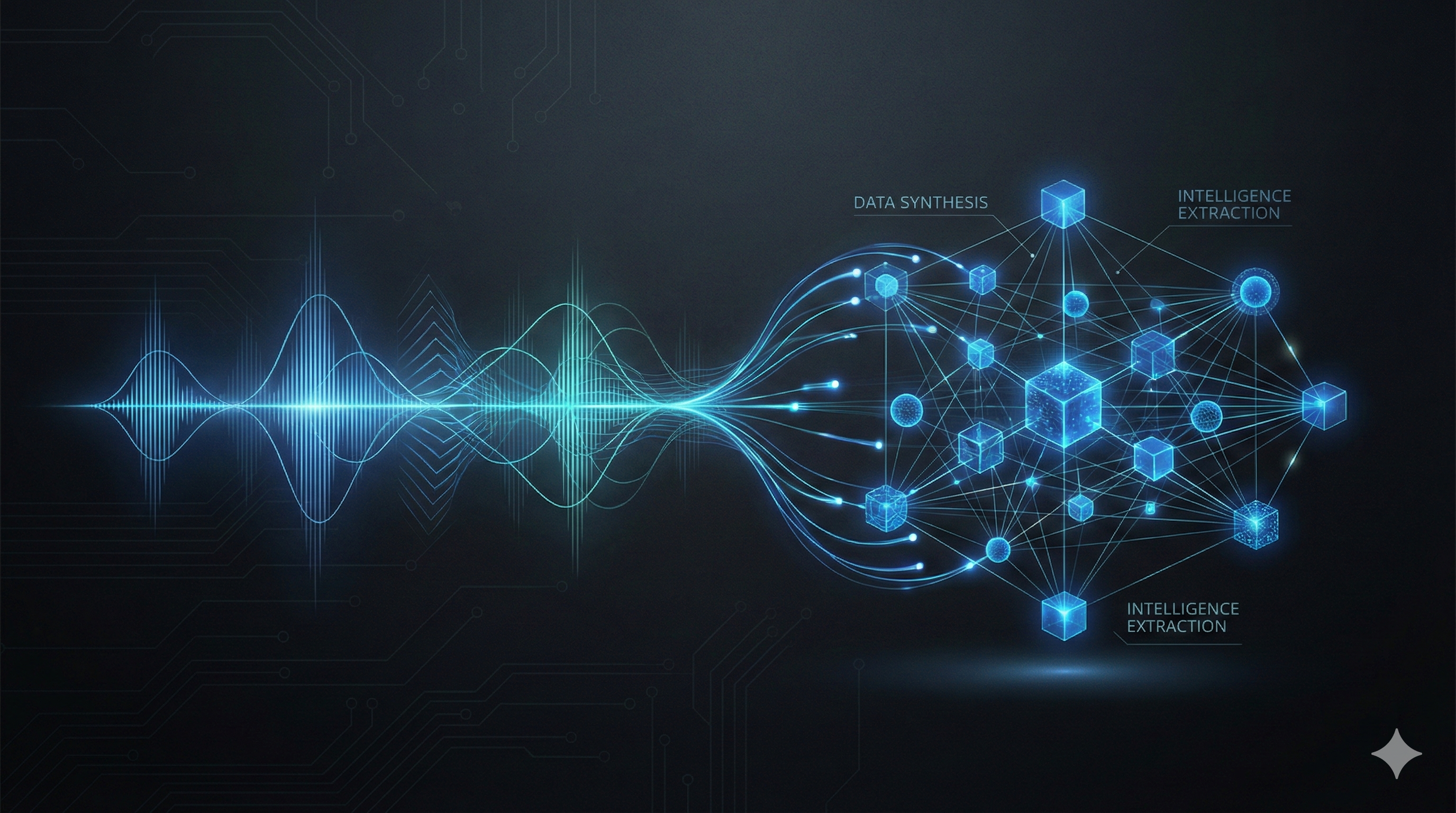
The gap isn't in transcription. It's not in summarization. It's in synthesis — the ability to flatten an entire podcast ecosystem into a searchable, queryable knowledge base.
What Synthesis Actually Looks Like
Imagine this:
Input: 50 tech and business podcasts. One month of episodes. Approximately 200 hours of audio.
Query: "What do hosts think about AI agents in production?"
Output:
- Synthesized answer drawing from 50+ voices
- Top recurring themes across all episodes
- Specific quotes with timestamps and sources
- Sentiment distribution (bullish, skeptical, cautious)
One query. Fifty podcasts. Two hundred hours of audio.
What would take a human researcher a week — done in seconds.
This isn't a hypothetical. This is what we're building.
The Technical Foundation
To build podcast intelligence at scale, you need infrastructure that most teams underestimate.
Semantic Search Across Episodes
Raw transcripts are useless for analysis. You need:
- Intelligent chunking (by topic, not arbitrary token limits)
- Vector embeddings for semantic similarity
- Cross-episode retrieval (find related segments across shows)
Synthesis, Not Just Retrieval
Retrieval gives you "here are 47 segments mentioning AI agents."
Synthesis gives you "here's what the podcast ecosystem collectively believes about AI agents, with disagreements highlighted and sources cited."
The difference is the difference between a search engine and an analyst.
Who Needs This?
| Role | Use Case |
|---|---|
| Investment Analyst | Monitor sentiment across finance podcasts, detect narrative shifts |
| Brand Marketer | Track competitor mentions, measure share of voice |
| Journalist / Researcher | "What do experts say about X?" with citations |
| VC / Investor | Track founder interviews, emerging market narratives |
| Policy Analyst | Monitor expert opinions on regulations, industry trends |
The common thread: professionals whose job is understanding what smart people think.
What We're Building
We started with the transcription layer — production-grade, hardware-optimized, open-source.
Now we're building the intelligence layer: cross-episode search, synthesis, and real-time watch queries.
It's called podcast2ai
Early access is open for professionals who need this. If that's you — analysts, researchers, marketers, investors — we want to hear from you.
Email us mail@corticalflow.com
The era of one-episode summaries is ending. Podcast intelligence is next.